2026-09-29 ·
Plano Tree Removal Permit Requirements Explained
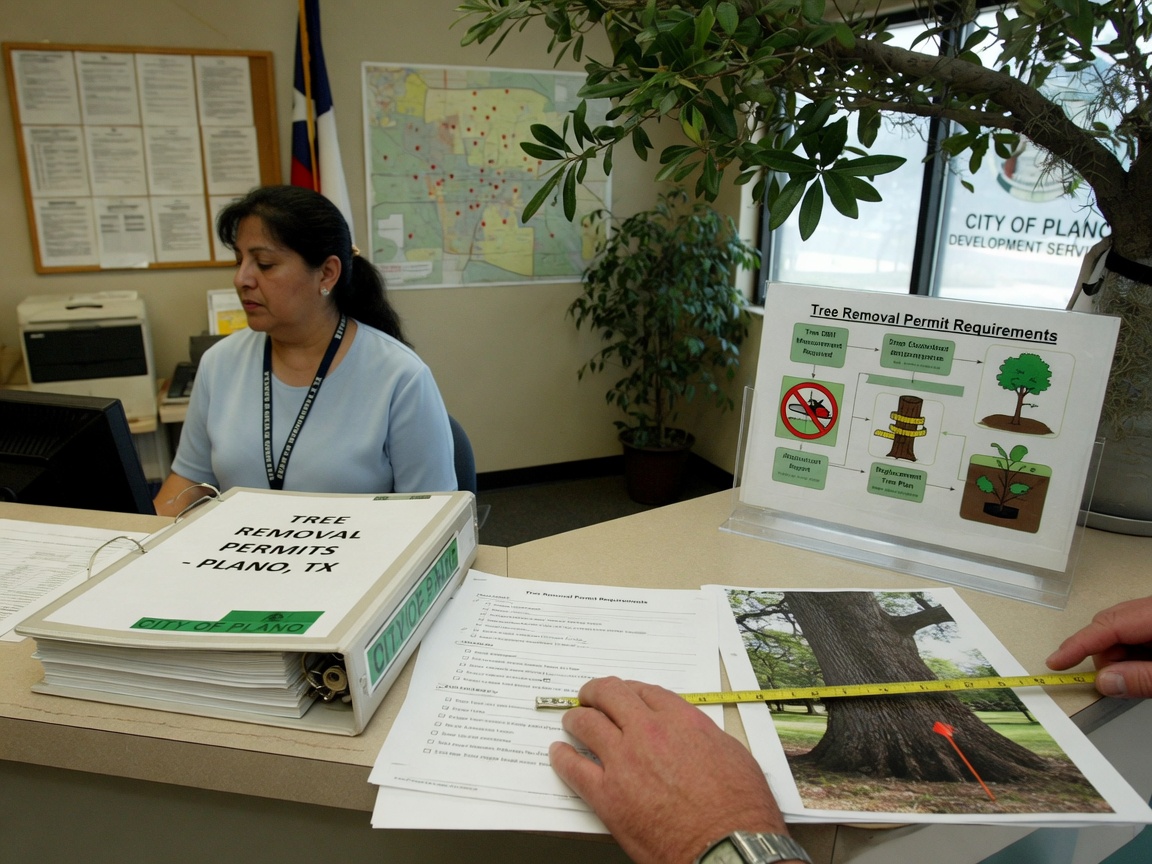
Plano does not issue one universal tree-removal permit for every cut. On a typical single-family lot in West Plano or East Plano, a dead or hazardous tree in the backyard is often a private decision, while a tree in the parkway, a tree tied to a building permit, or a tree the city has flagged under its preservation rules is not. The City of Plano, not Collin County, is the office that decides those cases inside the city limits. Before a saw comes out near Legacy West, Willow Bend, or Downtown Plano, the useful question is which of those buckets the trunk sits in. Summer heat and the occasional severe storm change urgency, not the paperwork. Confirm the current rule with city planning or engineering before you schedule tree removal.
Which Trees Trigger City Review In Plano
Inside the city limits, Collin County does not run a separate tree-removal desk for a Plano address. The City of Plano does, and it treats trees differently depending on whether they sit on a developed single-family lot, inside a commercial or multifamily site, or on land that still needs a building or site permit. Around Legacy Town Center and the Plano Convention Center, almost every mature tree is tied to a site plan, a landscape plan, or a shared parking edge. Pulling one without checking that file can stall a later inspection or force mitigation planting you did not budget. On an older East Plano lot, the more common trigger is not the name on a nursery tag. It is whether the trunk is in the public right-of-way, whether roots are lifting a sidewalk the city maintains, or whether you are also pulling a fence, pool, or addition permit. Development review is where preservation rules actually bite: staff look at what comes out, what stays, and what has to be replaced. A homeowner cutting a declining crepe myrtle behind the garage is usually outside that process. A builder clearing a row of post oaks to pour a pad is not. If your paperwork already mentions tree mitigation, canopy, or a landscape plan, read that plan before anyone prices the cut. The rule that applies is the one attached to your address and your permit file, not a county-wide slogan.
Street Trees, Parks, And Lot Edges
Trees between the sidewalk and the curb are the ones Plano homeowners misread most often. That strip in front of a West Plano colonial or a Downtown Plano bungalow is usually public right-of-way even when you mow it every week. Removing or heavily cutting a street tree without city approval can turn a Saturday project into a replacement bill you did not expect. The same caution applies near Oak Point Park, where parkland trees are city property, not an extension of the nearest backyard. Property-line trees are a different problem. If the trunk straddles your line with a neighbor in Willow Bend, ownership follows the trunk, and cutting it without agreement is a civil dispute, not a permit shortcut. Utility easements add another layer. Line crews have their own clearance rights, and those rights do not authorize you to fell a whole tree because a limb rubs a service drop. Before you assume a tree on your side of the fence is yours to remove, walk the lot with the survey if you have one. Measure from the back of curb, not from the grass you maintain. A trunk sitting 2–4 feet inside the parkway is still a city tree on most Plano frontages. That single measurement decides more permit questions than any online checklist, and it takes about 10 minutes with a tape.
Storm Damage Does Not Erase The Paperwork
Once summer heat sets in, live oaks, red oaks, and cedar elms drop limbs; mild winters still produce the occasional ice or high-wind event that splits them. After a severe storm, a tree on a house, a car, or a power line is an emergency, and waiting on a routine planning appointment is not the first move. That does not mean every leaning tree in Legacy West is exempt from review once the hazard is down. Make the site safe, photograph the failure — the split trunk, the lifted root plate, the limb through the roof — and keep enough debris that the city or your insurer can see what failed. A hanging limb over a driveway is often a tree trimming job, not a removal, and trimming a private tree rarely needs the same review as taking the trunk out. If the whole tree has to go because the structure is compromised, document why before the wood is hauled off. Our notes on signs a tree needs removal after a North Texas storm cover the field checks we use before anyone calls a cut unavoidable. When a tree is actively unsafe, emergency tree removal comes first; the city conversation can follow once people and the structure are out of danger. Adjusters working Dallas, Frisco, and Richardson claims ask for the same photos.
What To Have Ready Before You Ask
Call or visit the City of Plano with facts, not a species guess from a phone photo. Have the site address, whether you are the owner, and a simple sketch showing the house, the fence, the sidewalk, and the tree. Note trunk diameter at about chest height — a tape around the trunk, divided by 3.14, is enough — and whether the tree is alive, dead, or storm-broken. If you are inside a newer subdivision near Legacy West, bring the HOA architectural rules too. An HOA letter is not a city permit, and a city okay is not an HOA okay. Either one can stop the job. Mention if the tree sits in a utility easement or within a few feet of a sewer cleanout. Plano’s clay soils heave, and roots that have already cracked a foundation or a lateral are part of the story, not a reason to skip the question. We are based at 820 Jupiter Rd and take calls Mon–Fri 8am–6pm and Sat 9am–2pm. We will walk the tree with you and describe what we see. We will not invent a city approval by guessing at a diameter cutoff or a fee that staff have not confirmed for your address. If they ask for an arborist letter, that is their request, and it should come from whoever they name.
After You Know Whether A Permit Applies
Once you know the tree can come down, the ground conditions still run the job. Expansive clay across Collin County holds water after a storm and turns a backyard in East Plano into a slick pad for a chipper. A side gate of 36–42 inches means hand-carrying rounds instead of driving equipment to the stump. A removal beside a pool screen in West Plano needs a different drop plan than an open side yard on an older Downtown Plano block. Price follows that access, the trunk size, and how much wood has to leave the lot. Those drivers are laid out in factors affecting tree removal costs in Collin County. If the city required replacement trees or a revised landscape plan, plant those on the schedule they gave you. Skipping mitigation is how a finished removal becomes a failed inspection months later. Stumps left in clay also resprout, so grinding is a separate step from the permit question, not a free extra. Keep the review trail — emails, the staff name, the date — with your closing papers. Streets from Willow Bend to the blocks around the Plano Convention Center get looked at again when the next owner pulls a permit, and “we thought it was fine” does not travel with the deed.